


News Detail



16
Eyl
KUTSO’S 100TH ANNIVERSARY PANEL ROADMAP FOR THE KÜTAHYA ECONOMY DISCUSSED
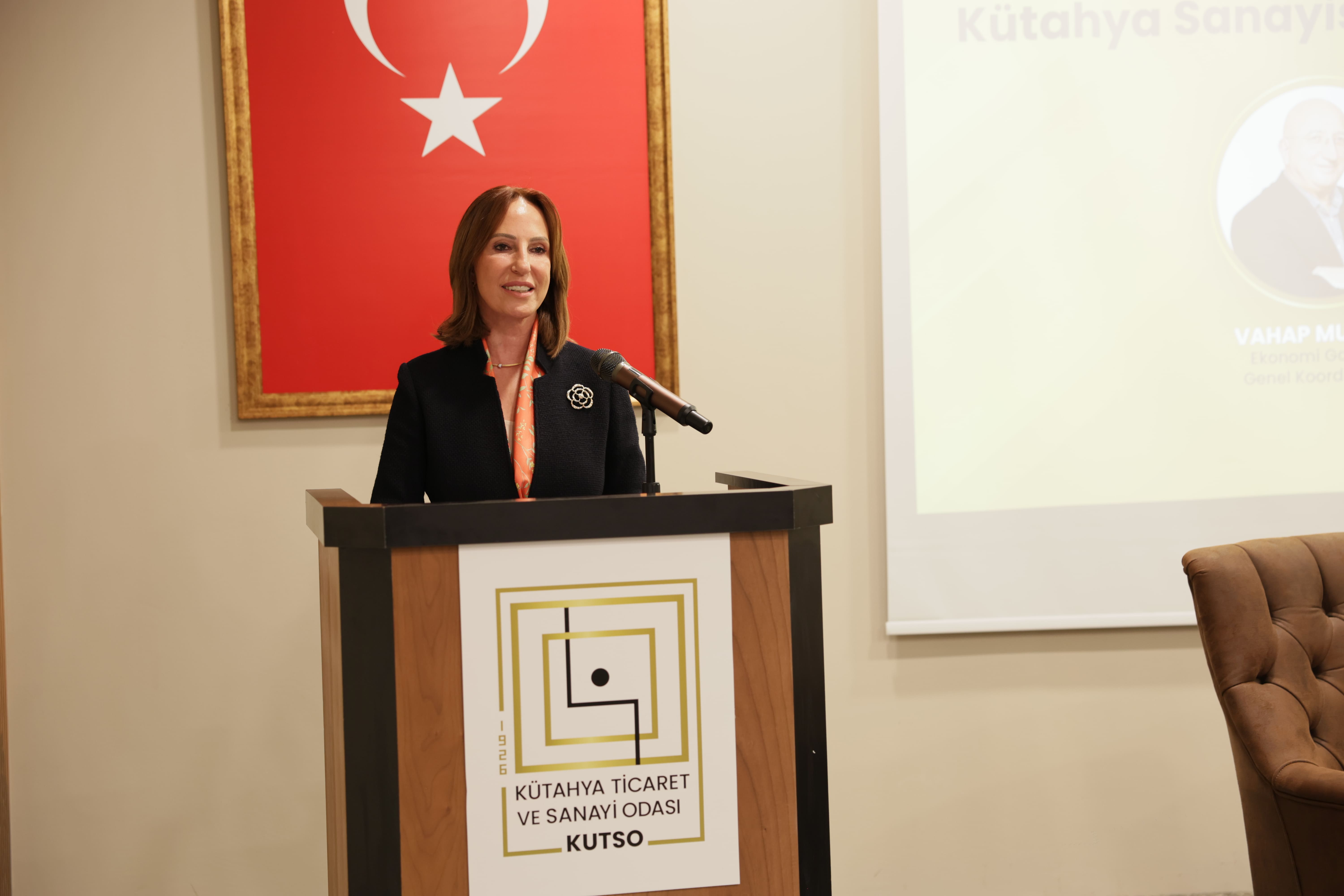
As part of its 100th anniversary celebrations, the Kütahya Chamber of Commerce and Industry (KUTSO) brought together Kütahya’s business community with two leading figures in economic journalism. Speaking at the opening of the panel, which featured Hakan Güldağ, Chairman of the Board of Directors of Ekonomi Gazetesi, and Vahap Munyar, General Coordinator of Ekonomi Gazetesi, KUTSO Chairman Esin Güral Argat outlined four key priorities for Kütahya’s economy: safeguarding balance sheets, maintaining a focus on productivity, diversifying and working together.
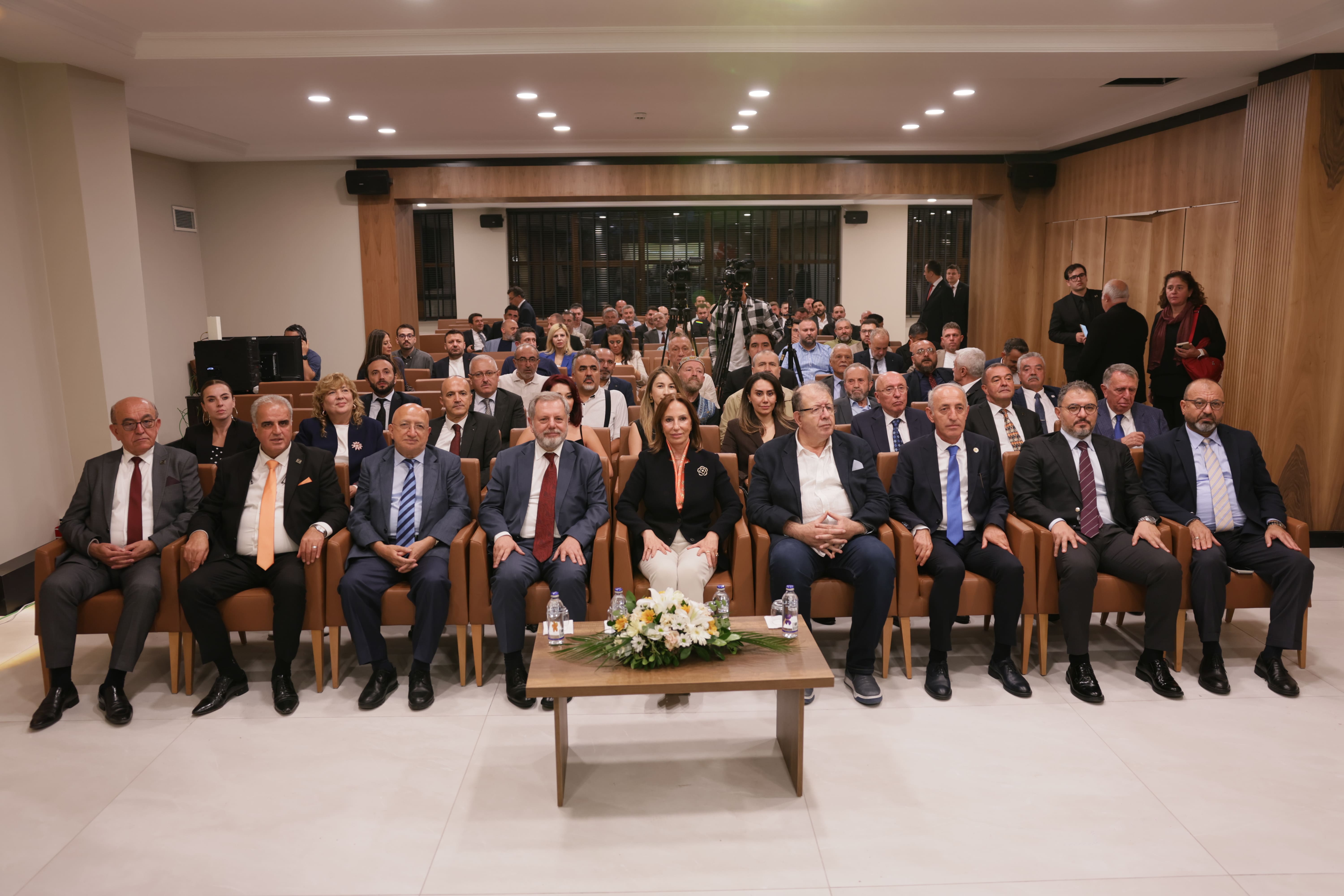
The panel, entitled “A Roadmap for Kütahya’s Industry and Trade in KUTSO’s 100th Year”, was held at the KUTSO Conference Hall on the evening of Wednesday, 16 September. Attended by KUTSO members from a wide range of fields, including industry, trade, services and entrepreneurship, the panel was also broadcast live on the Nasıl Bir Ekonomi (NBE) YouTube channel.
“The key issue is how we prepare Kütahya’s economy for its second century”
Delivering the opening speech, KUTSO Chairman Esin Güral Argat highlighted the importance of discussing the roadmap that will carry Kütahya’s industry and trade into a second century as KUTSO celebrates its centenary:
“Over the past century, KUTSO has lived through crises, periods of high inflation, exchange-rate fluctuations, technological transformations and major changes in the global economy. Yet throughout all these periods, production continued in Kütahya, trade continued and entrepreneurship continued. Therefore, today we are not simply discussing the next few months. The key issue is how we prepare Kütahya’s economy for its second century.
The period we are going through is not an easy one. However, an important distinction must be made: uncertainty is not a reason for inaction. Industry and trade have never operated in an environment in which every variable was known. The skill of a businessperson lies not in predicting the future perfectly, but in being prepared for different possible futures.”
“Our most important task is to work together”
Summarising the key priorities for Kütahya’s economy under four headings, Esin Güral Argat continued:
“First, we must safeguard our balance sheets and cash flow. In this period, healthy growth is just as important as growth itself. We must be more selective and disciplined in our financing decisions, inventory management and investment planning.
Second, we must not lose sight of productivity. When costs are high, it is easy to postpone investment in technology, digitalisation and energy efficiency. Yet these are precisely the areas that will set us apart from our competitors during such periods.
Third, we must reduce our dependence on a single market, a single customer and a limited number of sectors.
Fourth, and perhaps most importantly, we must work together. We need to build a production and innovation ecosystem in which our large enterprises, SMEs, organised industrial zones, university, public institutions, entrepreneurs and professional organisations draw strength from one another. We must be more than neighbours to one another; we must also be suppliers, customers, partners and solution providers.”
“Automotive, defence and healthcare industries represent new areas of growth for Kütahya”
Emphasising that diversifying the economy is as important as preserving Kütahya’s strong manufacturing tradition, Esin Güral Argat stated:
“We have accumulated considerable expertise in ceramics, glass, porcelain, mining and mineral-based industries. We will preserve these strengths. However, in our second century, growth in our existing sectors alone will not be sufficient; our economy must deepen and diversify.
Alongside advanced materials, the automotive supply industry, defence industry components and energy technologies, we should also regard healthcare industries as a new area of growth for Kütahya.
Another important area is the creative and cultural industries. Our heritage of cultural production, extending from ceramics and tiles to design and craftsmanship, should be regarded not merely as something to be preserved, but as the starting point for a new economic value chain combining design, branding, fashion, digital content, tourism and creative entrepreneurship.”
“We must become stronger despite uncertainty”
Emphasising that Kütahya’s future cannot be left solely to external variables such as interest rates, exchange rates and global demand, Esin Güral Argat concluded:
“The areas within our control are far greater. We can become more productive, make greater use of technology, enter new markets and sectors, develop our skilled human resources and, most importantly, do more business with one another.
In short, rather than waiting for uncertainty to pass, we must become stronger despite it. KUTSO’s first century has been an important part of Kütahya’s history of production. We want its second century to tell the story of a Kütahya that is more competitive, more diversified, generates greater added value and is far more connected to the world.”
Transformation of the global economy on the agenda
During the panel, Hakan Güldağ, Chairman of the Board of Directors of Ekonomi Gazetesi, and Vahap Munyar, General Coordinator of Ekonomi Gazetesi, discussed the transformation of the global economy and the roadmap ahead for industrialists in Türkiye.
Key topics included China’s position in global supply chains, opportunities for cooperation with Europe, scale and clustering in manufacturing, the implications of the Medium-Term Programme for the real economy, and current data on exports and industrial employment.
“Yesterday’s models no longer work today”
The presentations were followed by a question-and-answer session. Speaking during this session, KUTSO Chairman Esin Güral Argat emphasised that, at a time when global production balances are being reshaped, Türkiye’s traditional industrial model needs to evolve:
“Türkiye has so far benefited from significant export opportunities thanks to its cost advantages, logistical strength and relations with the European Union, and this model has served the country well. However, global dynamics have changed. Yesterday’s economic model no longer works today; we are living through a period in which the entire rulebook is being rewritten.
Perhaps Türkiye needs to look at the situation through an entirely new lens and develop a completely new industrial strategy, rather than continuing to rely on cheap labour and low-cost production. We must own our brands, designs and engineering capabilities, and strengthen our R&D. We should retain value-added activities in Türkiye while also maintaining our production capabilities wherever in the world they may be needed.
China’s economies of scale are a reality. Taking this into account, while also recognising the United States’ new strategies, Türkiye must decide what kind of industrial strategy it will pursue based on the capabilities it has developed. What should we invest in, and what should we be prepared to forego?”
“Free trade agreements in their current form are not sufficient”
Drawing attention to the growing protectionist policies around the world and the reciprocal barriers they create, Esin Güral Argat said:
“When we say that we will protect our industry, others will also seek to protect theirs, and this will inevitably lead to barriers being erected on both sides. We are already experiencing bottlenecks in exports. Under the conditions Türkiye currently faces, we can see that free trade agreements are not sufficient.
Try selling goods to Africa today and you will encounter customs duties of 15, 20 or 30 per cent in individual countries. Similarly, high customs duties are imposed in the vast majority of Middle Eastern countries. Some countries are turning this situation to their advantage; India, for example, is concluding a free trade agreement with the European Union.
We, too, need to adopt a more forward-looking approach and extend the competitive strength we can develop through free trade agreements into different markets.”
The issues discussed during the panel and the speakers’ analyses will be featured in forthcoming editions of Ekonomi Gazetesi, bringing the voice of Kütahya’s producers to its readers.
The video recording of the panel, which lasted approximately two hours, is available here.
News: KUTSO Press Office