
News Detail
16
Nis
TRAINING ON “GREEN TRANSFORMATION AND THE EU HARMONISATION PROCESS” HELD AT KUTSO
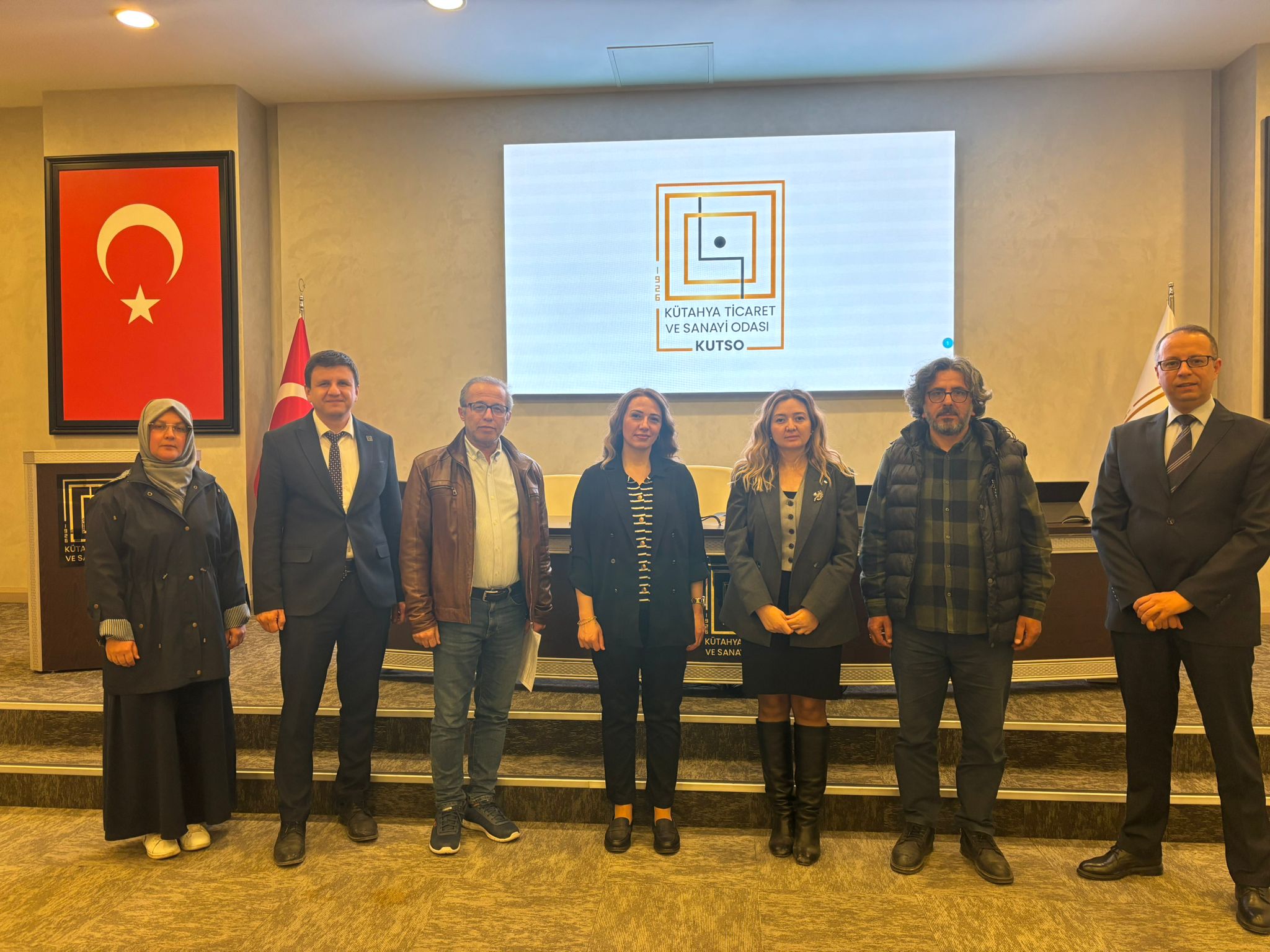
The training titled “Green Transformation: European Union Policies and the Harmonisation Process in Türkiye” was delivered by Assoc. Prof. Dr. Zeynep Hiçdurmaz, Academic Advisor of Kütahya Dumlupınar University & KUTSO, and was held in the Chamber’s conference hall with broad participation.
During the training, the concept of green transformation was addressed, and key notions such as climate neutrality, net zero emissions, and decarbonisation were conveyed to participants. In this context, the importance of the carbon footprint approach—covering all processes from production to consumption—was emphasised, while attention was drawn to the necessity for businesses to measure and manage their environmental impacts.
Within the programme, the policies introduced by the European Union under the framework of the Green Deal were evaluated. Information was shared regarding the target of becoming a climate-neutral continent by 2050, emission reduction targets for 2030, and regulatory packages such as “Fit for 55”. In addition, the functioning of mechanisms such as the European Union Emissions Trading System (ETS) and the Carbon Border Adjustment Mechanism (CBAM) was explained, and it was stated that these mechanisms constitute a direct cost and competitiveness factor, particularly for exporting companies.
Recent developments concerning Türkiye’s green transformation process were also addressed within the scope of the training. It was noted that, with the Climate Law entering into force in 2025, Türkiye’s 2053 net zero emission target has gained a legal basis, that preparatory work for the emissions trading system has been initiated, and that significant steps have been taken towards the establishment of carbon markets. Furthermore, it was emphasised that, with the effective implementation of CBAM as of 2026, green transformation is no longer a choice but a necessity.
The training also assessed the impacts of green transformation on industry and SMEs. It was stated that investments in energy efficiency, transition to clean production technologies, utilisation of renewable energy, and circular economy practices not only provide cost advantages for businesses but also enhance their competitiveness in international markets. Moreover, attention was drawn to the fact that companies failing to comply with sustainability criteria may face difficulties in accessing finance and will be subject to increasing reporting obligations.
As part of the programme, methods that businesses can implement to reduce their carbon footprint were also shared. Topics included reducing the use of fossil fuels, shifting towards renewable energy sources, digitalisation of production processes, improving energy and resource efficiency, and the use of carbon capture and storage technologies.
Another key topic of the training was green transformation financing and support mechanisms. Participants were informed about supports provided by TÜBİTAK, KOSGEB, and development agencies, as well as European Union funds, and guidance was provided on how companies can benefit from these resources.
The training concluded following the addressing of participants’ questions.
News: KUTSO Press